Circle Gets Binance's Investment—and Pays for Distribution
Binance's $100M investment and Arc's launch are real milestones. Circle's filings show why funding, paid distribution and repeatable earnings need separate tests.
Binance is paying Circle for shares. Circle is paying Binance for distribution. Both can be sensible transactions, but only the second belongs in a discussion of what it costs to grow the business.
Circle issues USDC, a dollar-linked token. Binance's $100M investment puts capital into the company; it does not tell us how much Circle will earn from the extra USDC activity. That distinction matters more now that Arc, Circle's blockchain, has actually launched.
A bigger network still has to pay its way
The constructive case is straightforward: more places to hold and use USDC can expand Circle's reserve base and product revenue. The missing step is what remains after partners and operating costs are paid. The latest contract makes that question concrete. It does not, by itself, settle it.
The fee clause behind the investment headline
Circle's 2026-09-22 8-K reports a 5-year arrangement signed on 2026-09-17. Binance promotes USDC; Circle pays a monthly incentive tied to USDC held through its Modular Smart Contract Wallet infrastructure service.

The clause establishes the direction of payment, not its eventual size. There is no defensible way to turn this announcement into a precise incremental-profit estimate without the fee rate and the relevant balances. The next filing may reveal more of the cost; until then, that uncertainty belongs in the analysis.
In a separate transaction, Binance bought 1,237,011 newly issued shares at $80.84. That is equity financing, not sales. The 5-year commercial term also permits early termination under specified events. Neither the duration nor the investment amount guarantees customer activity for the full period.
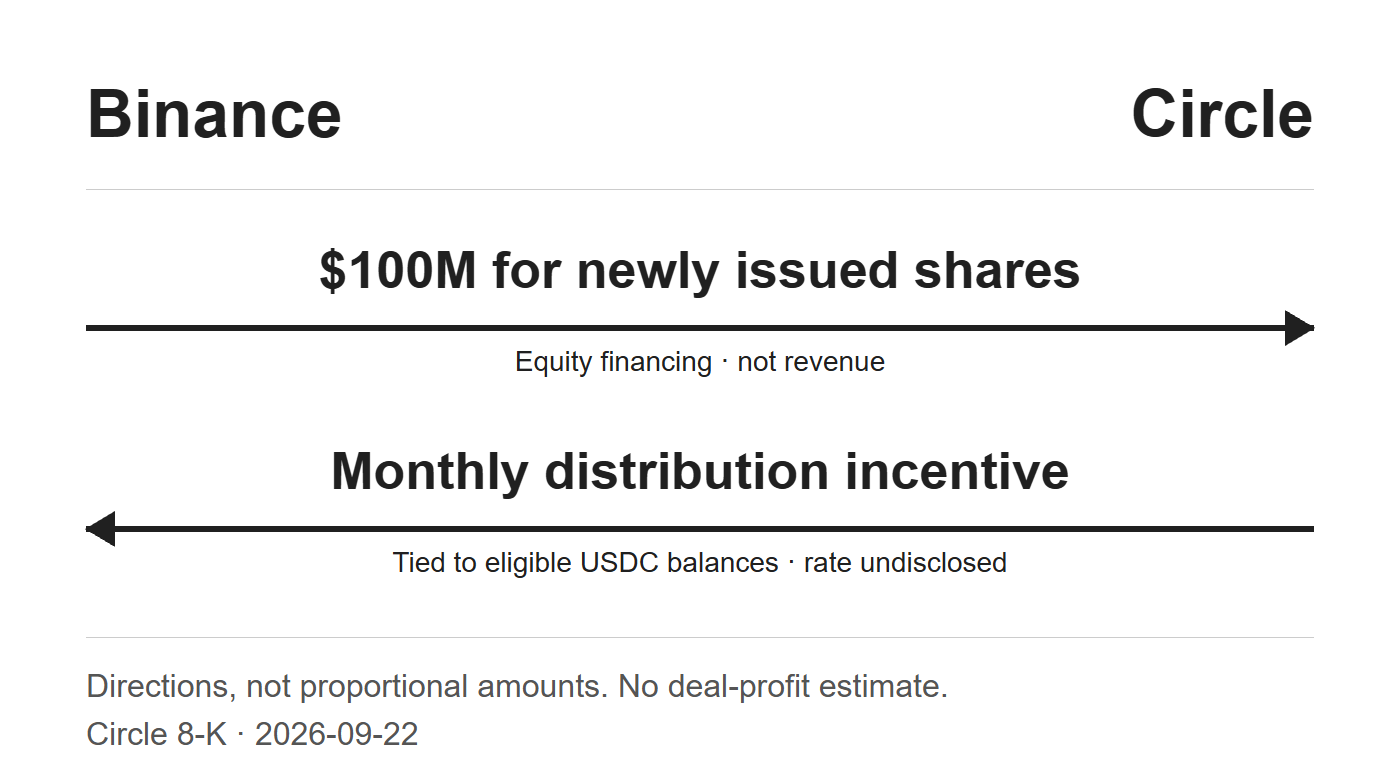
Explanation from the 8-K. Arrows show disclosed payment directions, not proportional amounts. The monthly fee rate remains unknown.
What Circle already keeps—and what it still spends
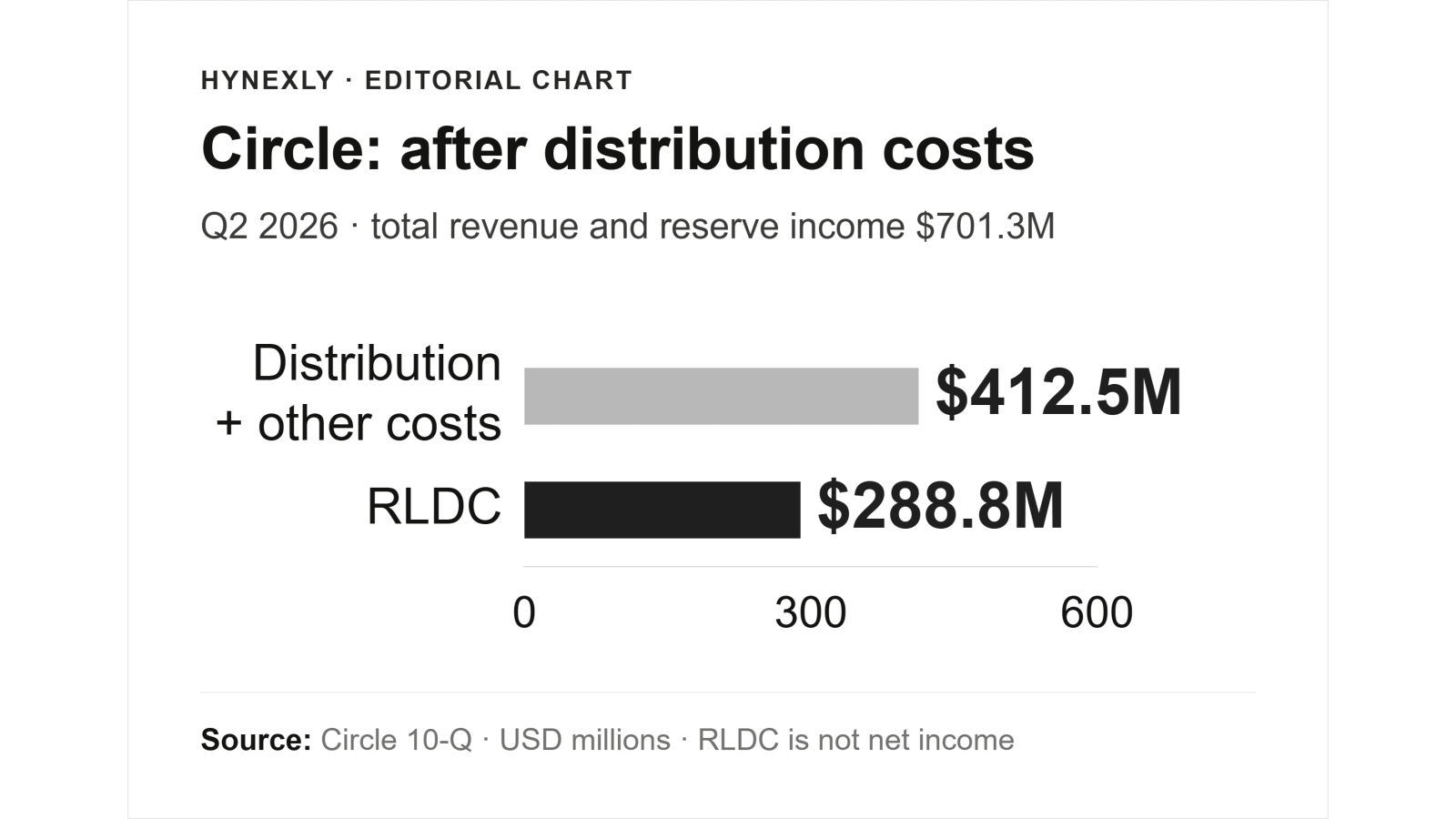
Q2 offers a starting point, not a forecast of the new deal. Total revenue and reserve income of $701.315M, less $412.470M of distribution, transaction and other costs, leaves $288.845M. Circle calls this revenue less distribution costs, or RLDC. Rounded, that is $288.8M, or 41.2% of the top line.
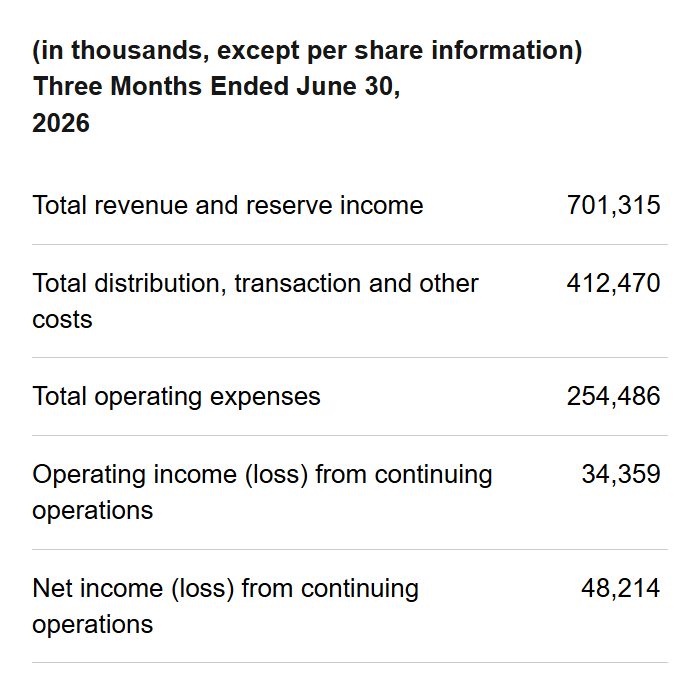
The important line below distribution costs is operating expense: $254.5M. After that, operating income was $34.4M; net income from continuing operations was $48.2M, after other income and tax. Calling RLDC “profit” would skip a large part of the business. Watch both the retained amount and the expenses below it in the next quarter.
Cash needs a similar distinction. Circle had $1.73B of corporate cash at quarter-end. The $73.16B segregated for stablecoin holders was a different pool, backing holders' claims—not money the company could freely spend on acquisitions or shareholders.
The cash-flow number includes a token presale
Half-year operating cash flow was $538.505M. The 10-Q says Circle received $222.0M from an ARC token presale, recorded as deferred revenue until the performance obligations were satisfied. Remove that one inflow and the arithmetic leaves $316.505M.
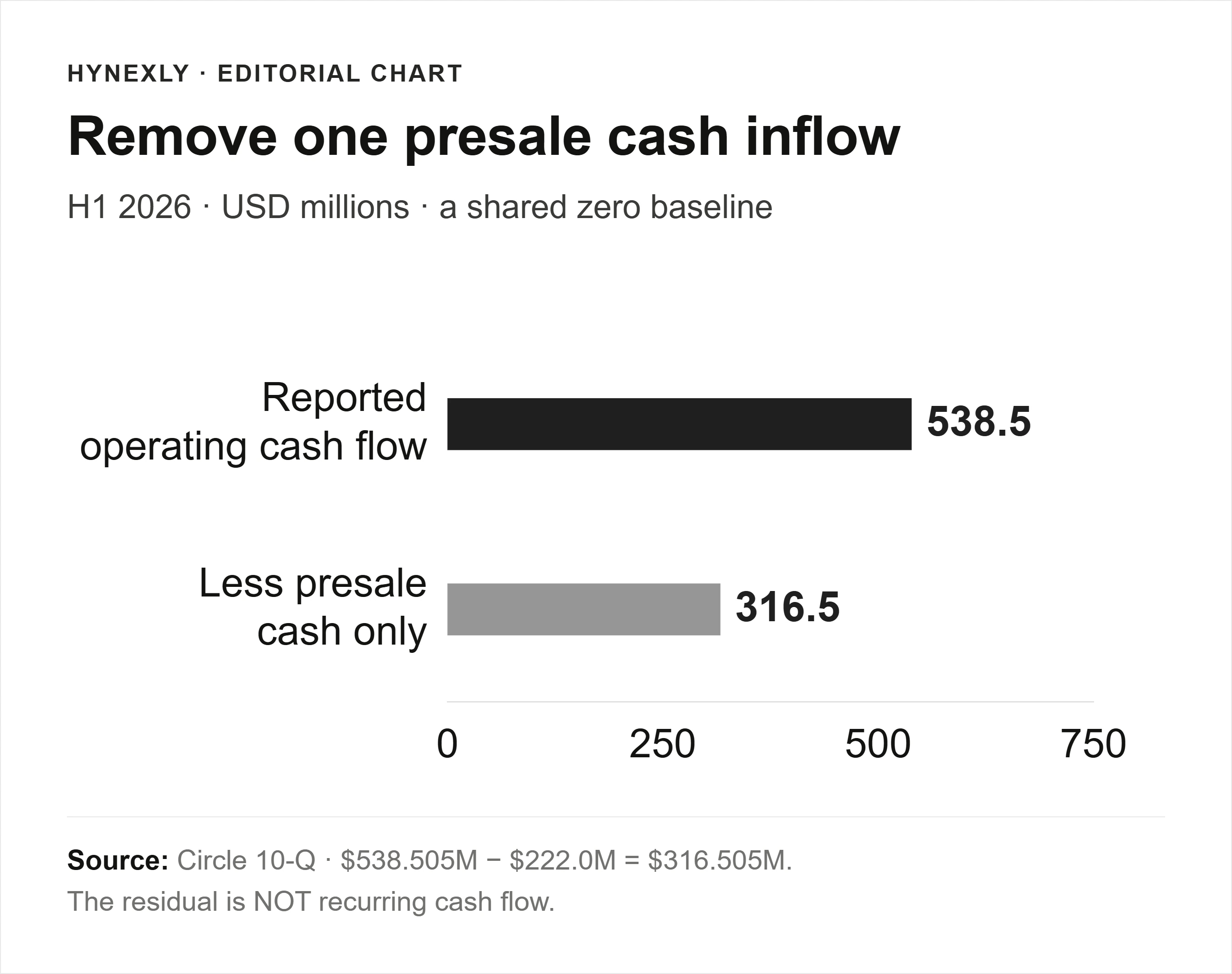
Article calculation from the 10-Q cash-flow statement, Note 11 and MD&A: $538.505M − $222.0M = $316.505M. Chart rounded to one decimal, USD millions. The residual is not a company-adjusted measure or an estimate of recurring cash flow; other working-capital effects remain.
Arc's launch does not justify silently relabeling that presale as recurring revenue. The next accounts need to show what was recognized, why, and how much income came from customers using the product again.
Arc has launched. Now measure what follows.
Circle announced the public mainnet launch on 2026-09-16. Its release describes more than 100 applications and more than 100 institutional and ecosystem builders, with network fees paid in USDC. These are company-reported launch indicators, not independently verified recurring revenue.
That is still progress. A functioning product can win customers; a launch schedule cannot. The countercase to skepticism is that wider distribution and Arc usage could raise absolute earnings even if partners take a share. Paying a distributor is not automatically a bad bargain. What matters is the income and expense on both sides of the agreement.
What the Street is pricing: a higher price, not a disclosed profit forecast
CRCL's regular close on 2026-09-22 was $94.59. The price was above both the pre-launch close and launch-day close. The path was not a straight line.
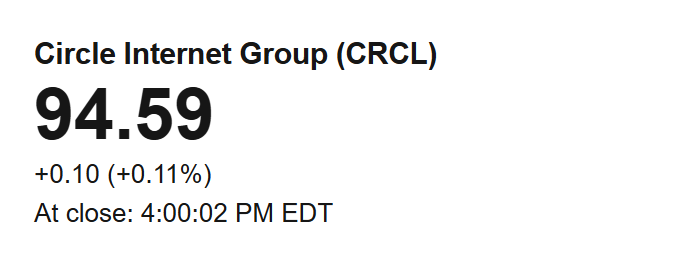
Market source capture: Yahoo Finance, viewed 2026-09-23. Company and regular-close panel only, reflowed; overnight quotes excluded. Schwab's dated quote corroborated $94.59 on 2026-09-22. Price in USD.
| Regular close | Price | Meaning of this comparison |
|---|---|---|
2026-09-15 | $86.30 | Session before the Arc launch |
2026-09-16 | $80.45 | Launch-day close |
2026-09-22 | $94.59 | +9.6% from the pre-launch close; +17.6% from launch day |
Historical endpoints: Yahoo Finance. Returns are price changes calculated as ending price ÷ starting price − 1, not total returns or an event study.
The rebound establishes repricing. It cannot tell us how much came from Arc, Binance, rates, or the broader market. Without the new fee rate, a precise deal-based valuation would imply knowledge the filing does not provide.
Where the optimistic reading can go wrong
The Fed raised its target range to 3.75–4.00% on 2026-09-16. Higher short rates can support reserve income over time, but the policy range is not Circle's realized reserve yield. Balances, reinvestment and partner payments still intervene. The Treasury yield guide explains why different interest rates should not be substituted for one another.
There is another trap in the outlook. Circle's $310–330M other-revenue guidance and 41.7–43.7% RLDC-margin guidance for FY2026 both include recognized ARC token-presale revenue, according to the earnings release's footnote. Reaching either range would not, alone, prove that recurring product economics had improved.
What flips the call
| Next evidence | More convincing | Less convincing |
|---|---|---|
Arc usage after launch | Disclosed sustained customer use and associated revenue | Builder counts without economic follow-through |
Distribution economics | Retained income grows after partner payments and operating expense | Costs absorb the added reserve or product income |
Token accounting | Recognition separated from recurring customer revenue | Presale recognition presented as a repeatable run rate |
Reserve base | Average balances sustain income through rate changes | A shrinking base offsets the rate benefit |
These are conditions for revising the thesis, not a claim about an unannounced earnings date. The related Coinbase Q2 analysis examines the other side of paid stablecoin distribution.
The next useful headline is not simply another partner or application count. It is evidence that a larger network leaves Circle with more income it can earn again.
Method and limits
Reviewed 2026-09-23. Financial inputs come from the Q2 filing and release; the new contract comes from the September 8-K. Company launch claims remain attributed. All derived values are labeled, and dated prices are not live quotes. The original publication date is retained; this revision replaces stale launch plans and August pricing. This AI-assisted article was source-checked and edited; it offers general research, not an investment rating, price target or individualized advice.
Primary references cited or linked in this analysis. Click through to read each source in full.
Choose the next evidence gap to investigate.
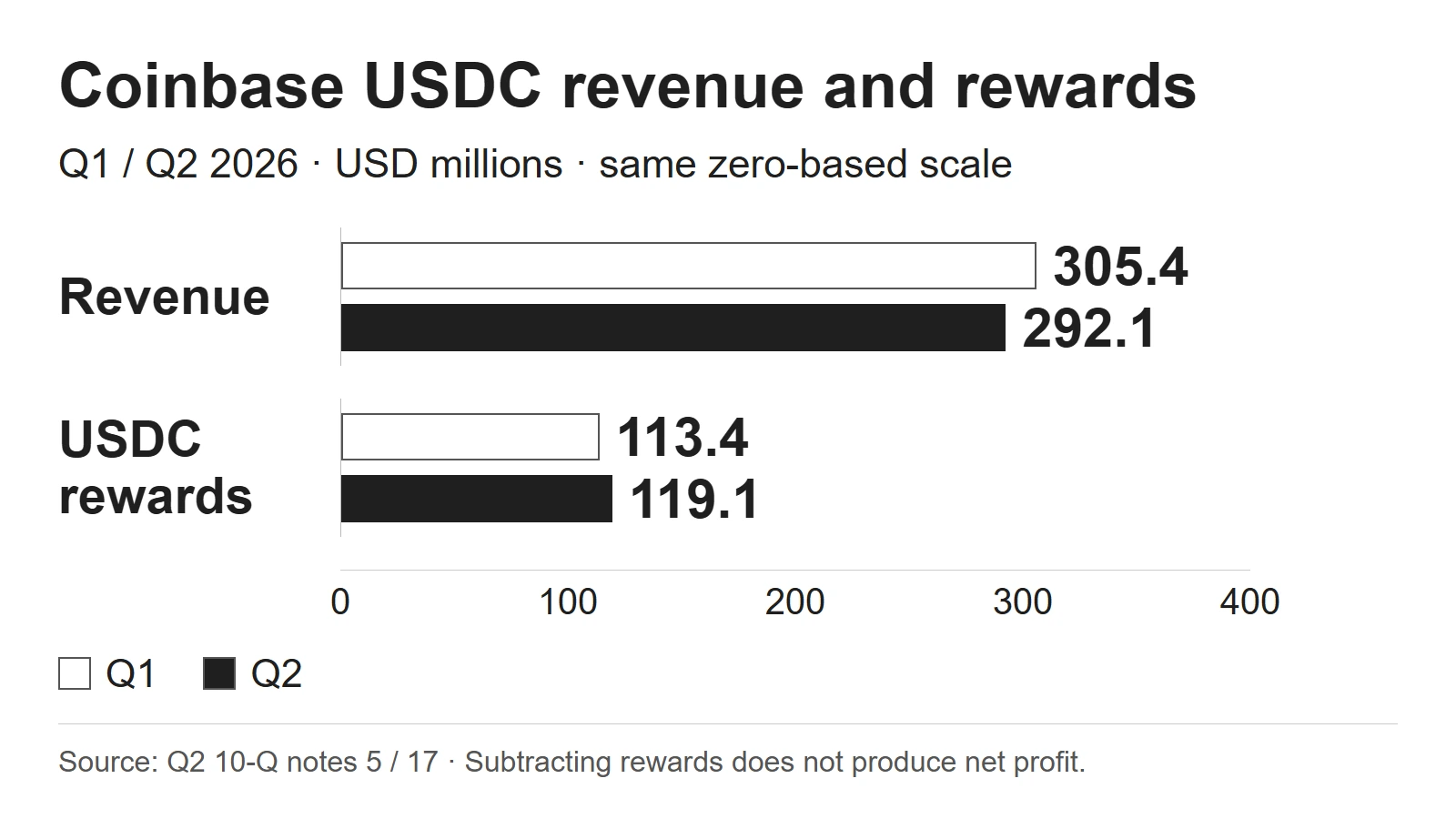
Coinbase's USDC Revenue Chart Leaves Out a Key Cost
Coinbase's stablecoin business cushions trading, but customer rewards and new shares complicate the benefit to shareholders. A Q2 filing check explains both.
Owner-operated US market research desk
Owner-operated US stock and market coverage built from public filings, SEC EDGAR, official reports, company releases, and market data.
- Source-grounded research with primary filings & official reports
- Bilingual EN / KO editorial workflow
- Manual editorial QA before publish